 Astro River Institute
Nine grahas, one sacred fire
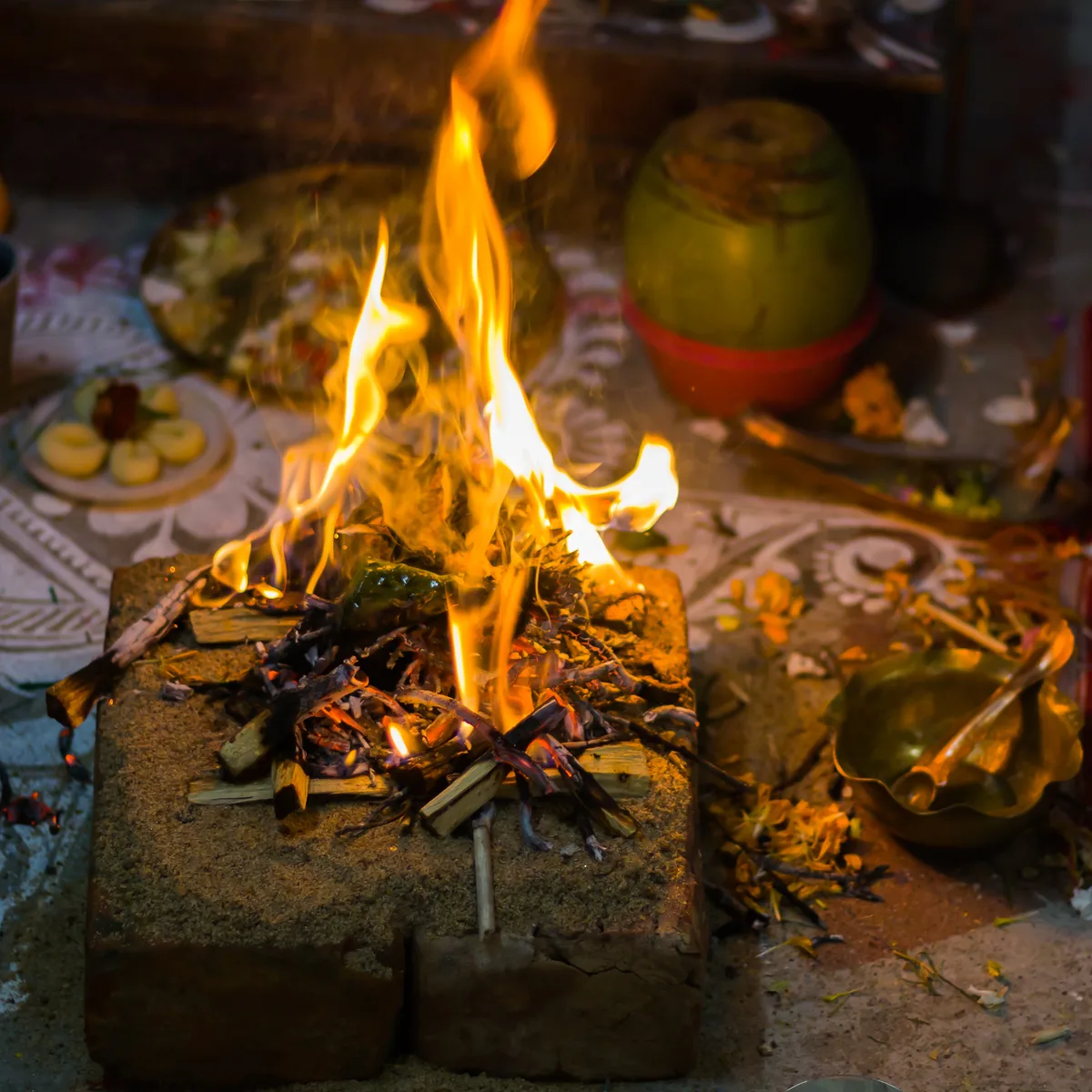
The havan is where the pujan is offered. Ghee, samagri and mantras go into the fire for all nine grahas, and the purnahuti, the full final offering, completes it.
Pictures are for illustration only.
Navagraha Pujan for all nine grahas · नवग्रह शांति पूजा
One pujan for all nine grahas, performed for you in your name and gotra, wherever you are.
One pujan for all nine grahas, performed for you in your name and gotra, wherever you are.
The havan is where the pujan is offered. Ghee, samagri and mantras go into the fire for all nine grahas, and the purnahuti, the full final offering, completes it.
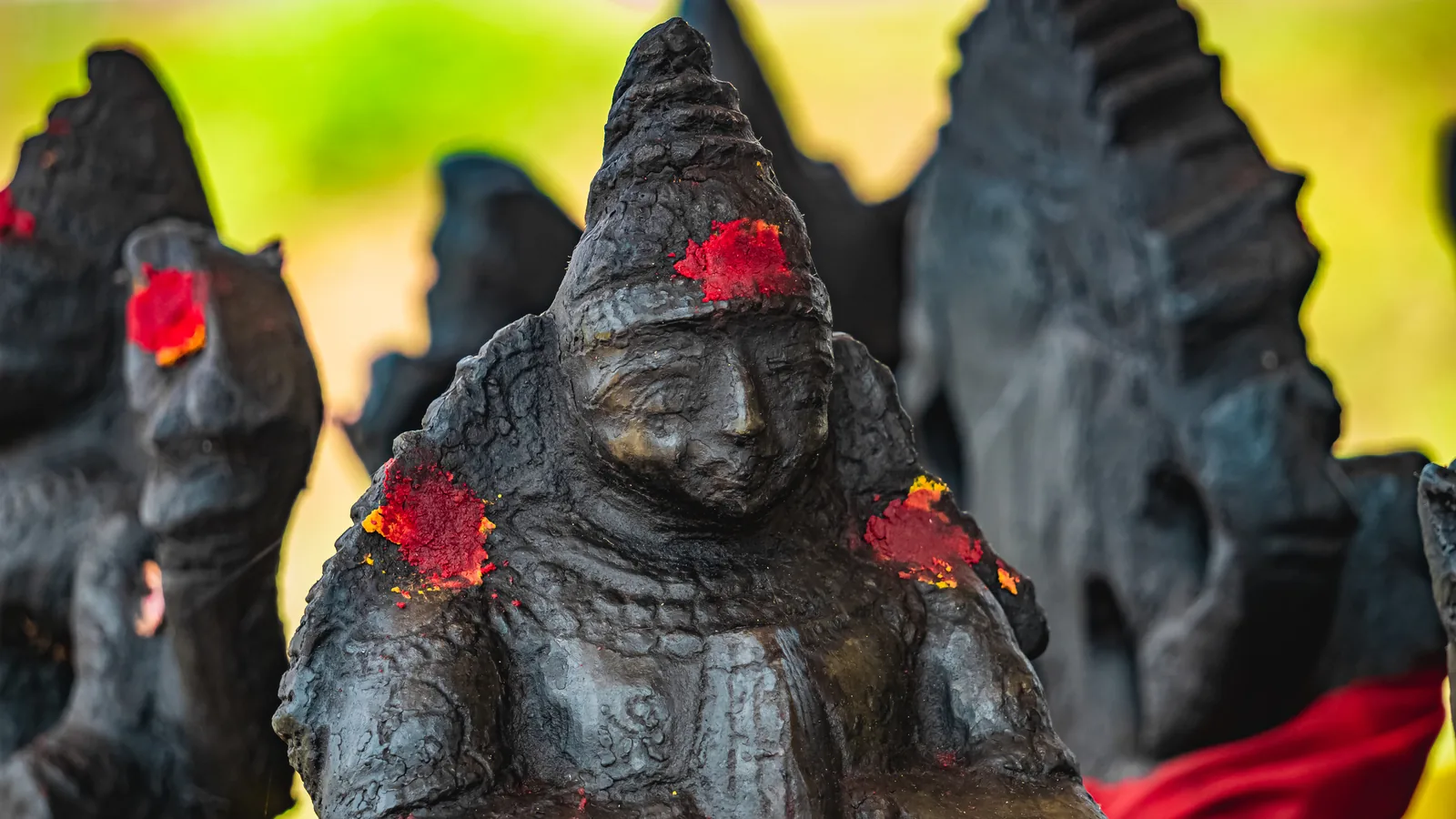
In Navagraha shrines the nine stand together on one platform. The pujan seats them the same way on the Navagraha mandal, each with its colour and grain: wheat for Surya, rice for Chandra, black sesame for Shani.
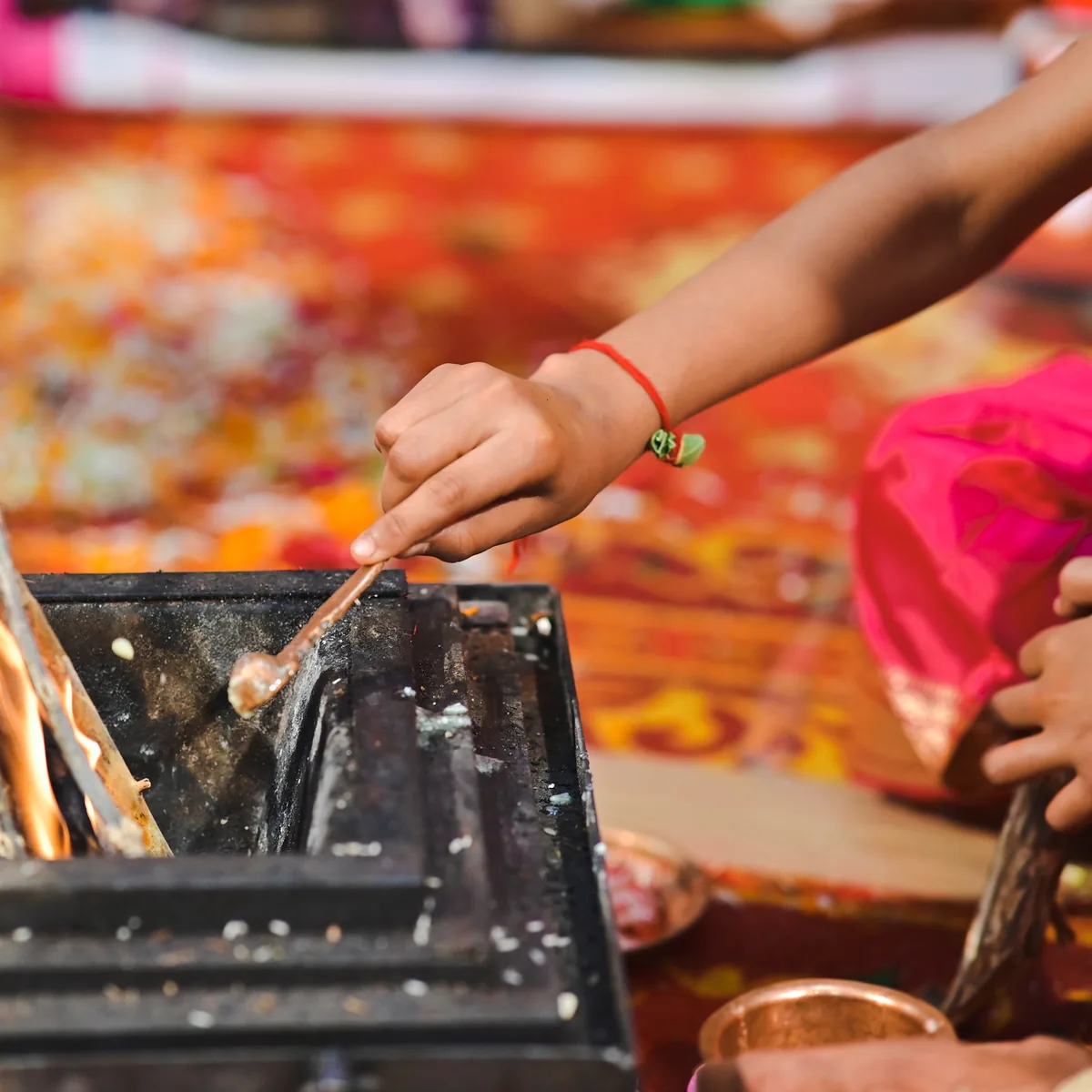
In the Mahapujan each graha receives its own samidha in the fire: Aak for Surya, Palash for Chandra, Khair for Mangal, Apamarg for Budh, Peepal for Brihaspati, Gular for Shukra, Shami for Shani, Durva for Rahu and Kusha for Ketu.
| What you get | Navagraha Path | Shanti Pujan | Sampoorna Mahapujanthe fullest form |
|---|---|---|---|
| Price | ₹12,100 incl. GST | ₹24,800 incl. GST | ₹53,100 incl. GST |
| When | One sitting | Up to 3 days | 4–5 days |
| All nine grahas invoked | — | ||
| Navagraha stotra | |||
| Havan | One havan | One for all nine | With each graha's own samidha |
| Food and vastra for the brahmins | — | ||
| Additional Vedic processes, longer hours each day | — | — | |
| Each graha's beej-mantra jaap | — | — | |
| Call with your Astrologer | — | — | Before the puja |
| Sankalp in your name and gotra | |||
| Photos of your puja |
Each is your own ceremony, performed in full, in your name and gotra, with your sankalp. One name is included; further names can be added to the same sankalp when you book. The monthly group pujan is a different way to take part; it is described under the price at the top of the page.
Navagraha Shanti Puja, also written Navgraha Shanti Puja, is the Vedic pujan of all nine grahas together: Surya, Chandra, Mangal, Budh, Brihaspati, Shukra, Shani, Rahu and Ketu. It is offered in your name and gotra, with your sankalp.
You choose how your own ceremony is done, on your date. Navagraha Path is one sitting: the Navagraha stotra is recited and one havan is offered. Shanti Pujan takes up to three days: all nine grahas are invoked, the Navagraha stotra is recited and the havan is offered, with food and vastra for the brahmins. The Sampoorna Mahapujan takes four to five days, with longer hours each day: it includes everything in Shanti Pujan, the additional Vedic processes, and each graha's own beej-mantra jaap and its own samidha in the havan. It comes with a call with your Astrologer before the puja, to choose the grahas to emphasise and the muhurat.
You can also take part in the monthly group pujan (samuhik). Your family's names are taken in the sankalp at the Institute's monthly Navagraha pujan, on a Shukla Paksha Sunday muhurat. It is always performed, however many families book, and photos of the ceremony are sent to you after.
A pujan is prayer performed in a set, careful way. Like every prayer it is answered as nature decides, in the best interest of you and everyone involved; no result can be promised.
The Navagraha are the nine grahas of Jyotish: Surya (the Sun), Chandra (the Moon), Mangal (Mars), Budh (Mercury), Brihaspati (Jupiter), Shukra (Venus), Shani (Saturn), and the two nodes of the Moon, Rahu and Ketu. The tradition holds that each graha shapes a part of life, and that a graha weak or afflicted in a chart can weigh on the part it rules.
Navagraha Shanti Puja honours all nine together, so that none is left out. Each graha is installed in its own place on the Navagraha mandal and worshipped with its mantra, its colour and its grain, and offerings are made to all nine in the havan. Shanti means peace: the pujan asks each graha to be calm and favourable.
The tradition turns to Navagraha Shanti Puja:
When one graha alone weighs on your chart, its own puja may suit you better; the related pujas are at the end of this page. If you are unsure, ask us before you book.
The tradition holds that Navagraha Shanti Puja calms the grahas that weigh on a chart and steadies those that support it. Families perform it for steadiness of mind, for fewer obstacles in work and at home, and for a good start to what comes next.
A pujan is prayer performed in a set, careful way. Like every prayer it is answered as nature decides, in the best interest of you and everyone involved; no result can be promised.
Shanti Pujan and the Sampoorna Mahapujan follow this Vedic order; the steps marked Mahapujan belong to the Sampoorna Mahapujan. Navagraha Path is one sitting: Sankalp, the Navagraha stotra and one havan.
Each graha has its own beej mantra, its own samidha for the havan, its colour and its grain. In the Sampoorna Mahapujan each graha's mantra is chanted for it and its samidha is offered in the havan.
Surya (the Sun)
Chandra (the Moon)
Mangal (Mars)
Budh (Mercury)
Brihaspati (Jupiter)
Shukra (Venus)
Shani (Saturn)
Rahu
Ketu
Because it honours all nine grahas, Navagraha Shanti Puja is not tied to one weekday the way a single graha's puja is, such as Sunday for Surya or Saturday for Shani. The tradition looks instead for a good muhurat in the panchang: a favourable tithi, nakshatra and yoga, away from Rahu Kaal.
Many families choose the start of a new dasha, the day of the birth nakshatra, or a day before a marriage or a new venture. With the Sampoorna Mahapujan, the muhurat is chosen by your Astrologer on the call before the puja.
Your family's names are taken in the sankalp at the Institute's monthly Navagraha pujan, on a Shukla Paksha Sunday muhurat. It is always performed, however many families book, and photos of the ceremony are sent to you after.
Choose by how many names you bring:
Book whenever you are ready: your family is included in the next ceremony, and its date appears in your dashboard the moment you book.
You do not need to be present. The pujan is performed in your name and gotra by your sankalp, wherever you live, and you can pay in rupees or in dollars.
Photos of your puja are sent to you after the ceremony.
It is the Vedic pujan of all nine grahas together, Surya, Chandra, Mangal, Budh, Brihaspati, Shukra, Shani, Rahu and Ketu, offered in your name and gotra. The tradition performs it to calm the grahas that weigh on a chart and to ask all nine to be favourable: in a difficult dasha, in Sade Sati, when several grahas are afflicted at once, and before a marriage or a new venture.
The tradition holds that it brings steadiness of mind, fewer obstacles and a good start to what comes next, by calming the grahas that weigh on a chart and steadying those that support it. A pujan is prayer performed in a set, careful way. Like every prayer it is answered as nature decides, in the best interest of you and everyone involved; no result can be promised.
Your own ceremony: Navagraha Path is ₹12,100 including GST: one sitting, with the Navagraha stotra and one havan. Shanti Pujan is ₹24,800 including GST: up to three days, with all nine grahas invoked, the Navagraha stotra and the havan, and food and vastra for the brahmins. The Sampoorna Mahapujan is ₹53,100 including GST: four to five days with longer hours each day, everything in Shanti Pujan, the additional Vedic processes, each graha's own beej-mantra jaap and its own samidha in the havan, and a call with your Astrologer before the puja, to choose the grahas to emphasise and the muhurat. One name is included in the sankalp; further names can be added when you book. The monthly group pujan is ₹3,100 including GST for one name, ₹5,100 including GST for a couple, ₹8,100 including GST for a family of up to four and ₹9,901 including GST for a joint family of up to six.
It is not tied to one weekday, as a single graha's puja is. The tradition chooses a good muhurat from the panchang, a favourable tithi, nakshatra and yoga away from Rahu Kaal, often at the start of a new dasha, on the birth nakshatra, or before a marriage or a new venture. With the Sampoorna Mahapujan, the muhurat is chosen by your Astrologer.
Yes, you can book it online, and you do not need to be present. The pandits perform it in your name and gotra by your sankalp, wherever you live. Photos of your puja are sent to you after the ceremony.
A homam, or havan, is the offering into the sacred fire. Navagraha Homam usually names the fire offering to the nine grahas; Navagraha Shanti Puja is the whole pujan, the sankalp, Ganesh and Kalash puja, Navagraha sthapana and stotra, closing with that havan. Each way of your own ceremony includes the havan, and in the Sampoorna Mahapujan each graha receives its own samidha. For a larger fire ceremony, see the Navagraha Maha Yagna.
When several grahas weigh on your chart, or you are unsure which one does, the tradition turns to the Navgraha puja, which honours all nine. When one graha clearly stands out, such as Shani in Sade Sati or Rahu in its mahadasha, that graha's own puja may suit you better. If you are unsure, ask us before you book; with the Sampoorna Mahapujan, your Astrologer chooses the grahas to emphasise with you.
It is a different way to take part. Your family's names are taken in the sankalp at the Institute's monthly Navagraha pujan, on a Shukla Paksha Sunday muhurat. It is always performed, however many families book, and photos of the ceremony are sent to you after. You choose by how many names you bring: one, two, up to four or up to six.
Photos of your puja are sent to you after the ceremony.
 Pictures are for illustration only.Pujas
Maa Katyayani Puja
Worship of Maa Katyayani, the sixth form of Durga, for marriage and harmony

Maa Baglamukhi Puja
Worship of Maa Baglamukhi, the Devi who stills what stands against you
Panchakarshan Puja
A Vedic pujan for love, attraction and harmony between two people
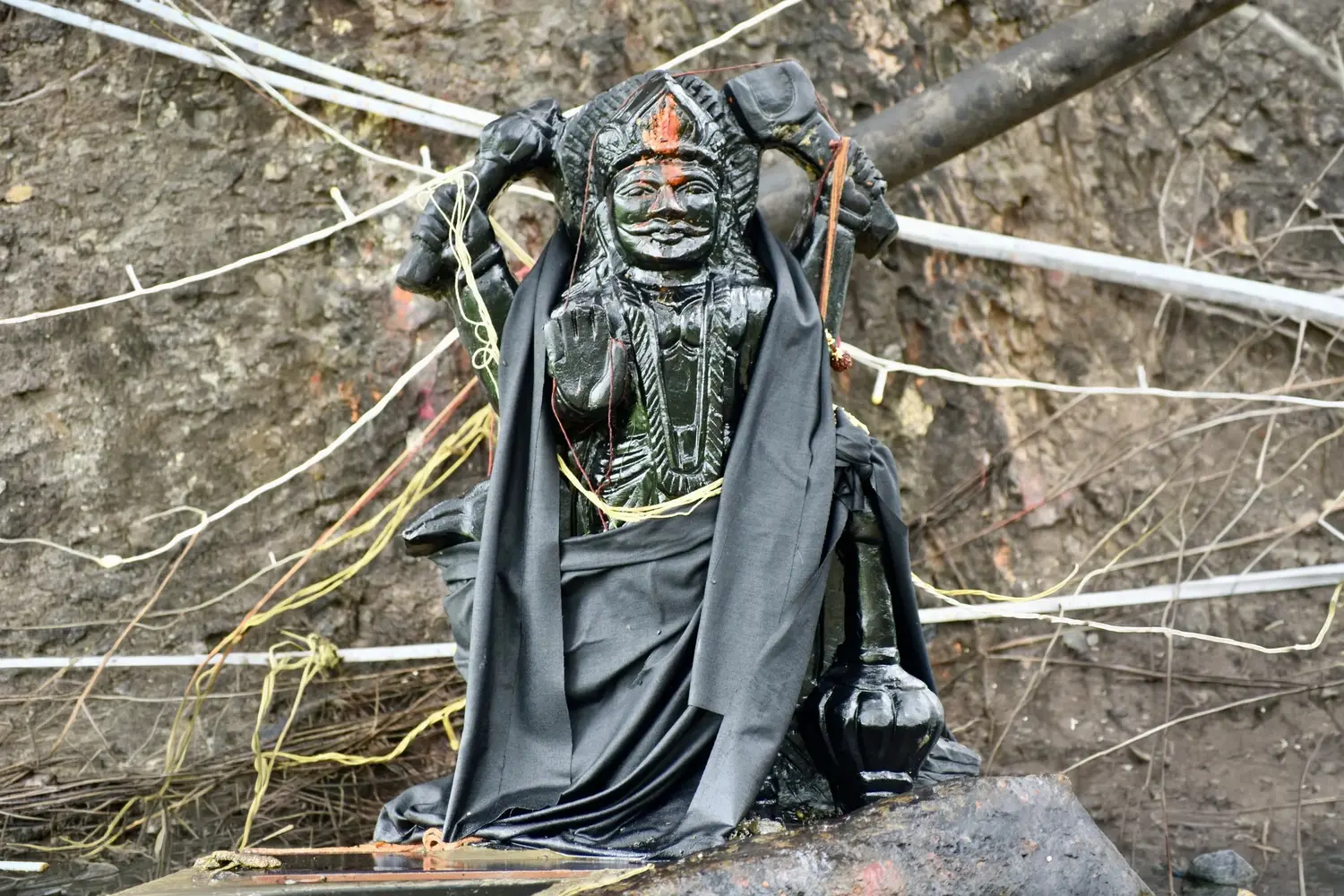 Pictures are for illustration only.PujasFor Saturn
Shani Shanti Puja
Chanting and worship of Shani for steadiness through Sade Sati and Saturn's periods
All remedies are for spiritual and guidance purposes only. Gemstone certifications provided by independent laboratories. Shipping timelines are estimates. Photos are representative — natural items vary in appearance.